A place to develop

Build your skills. Follow your curiosity. Make it yours.
- Ages 10–13
- Two-hour classes
- Tooele, Utah
You have ideas. Let’s explore what you can do with them.
Look closer, experiment with materials, and learn techniques that give you more ways to draw, paint, build, and create. You’ll take on creative challenges with guidance, room to make your own decisions, and time to develop something you’re excited about.
$110 / monthMaterials included
Compare the programs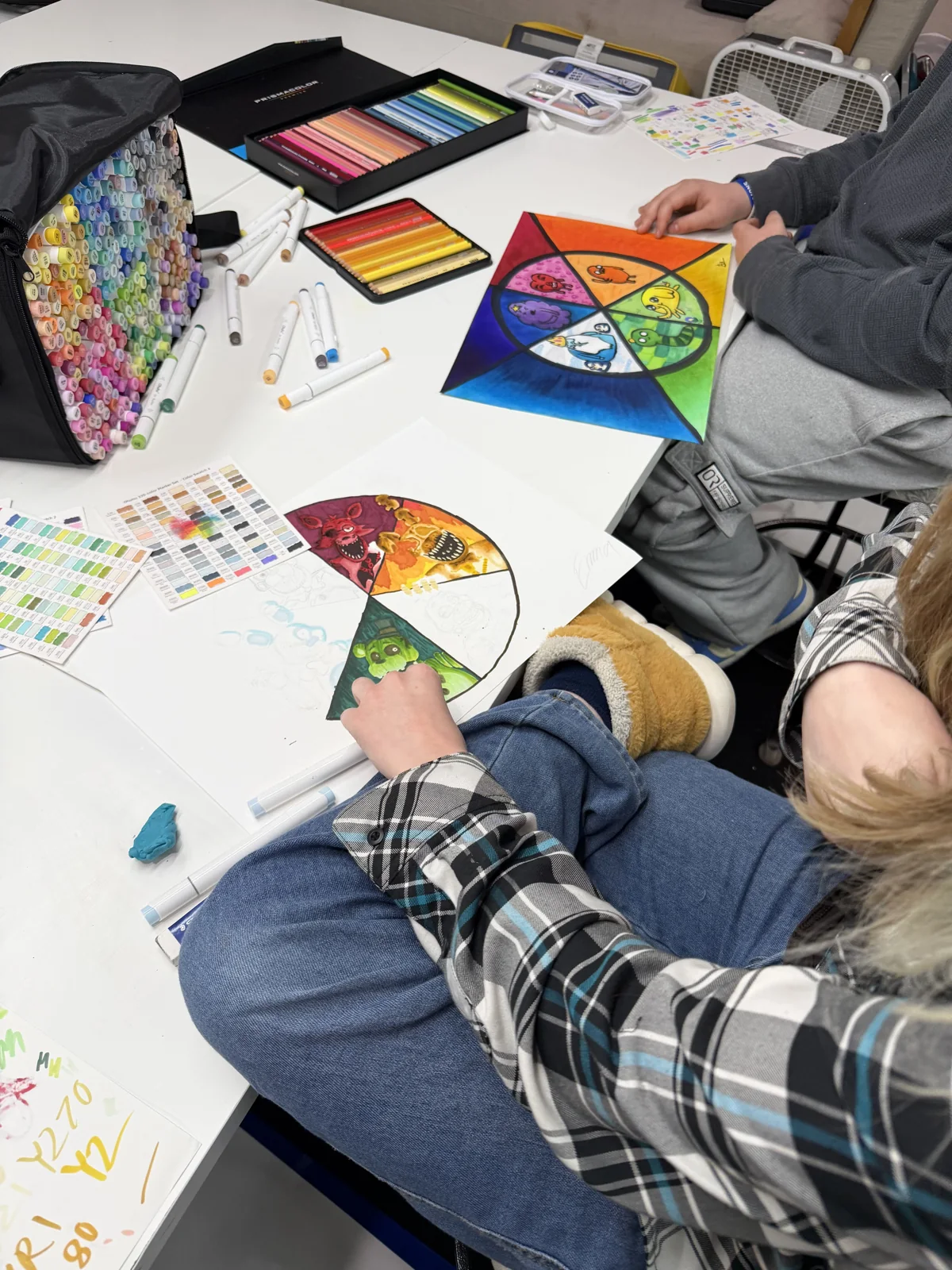
“I have an idea. How do I make it work?”
That’s a good place to start.
Maybe you want a drawing to feel more three-dimensional, a sculpture to balance, or a character to look like it’s moving. We explore the skills behind those ideas, then put them to work.
I demonstrate techniques, help you spot what needs attention, and offer questions to move your thinking forward. You get to test possibilities and decide what serves your work.
More skills. More possibilities.
Learning to look closely changes what you notice—and what you can make.
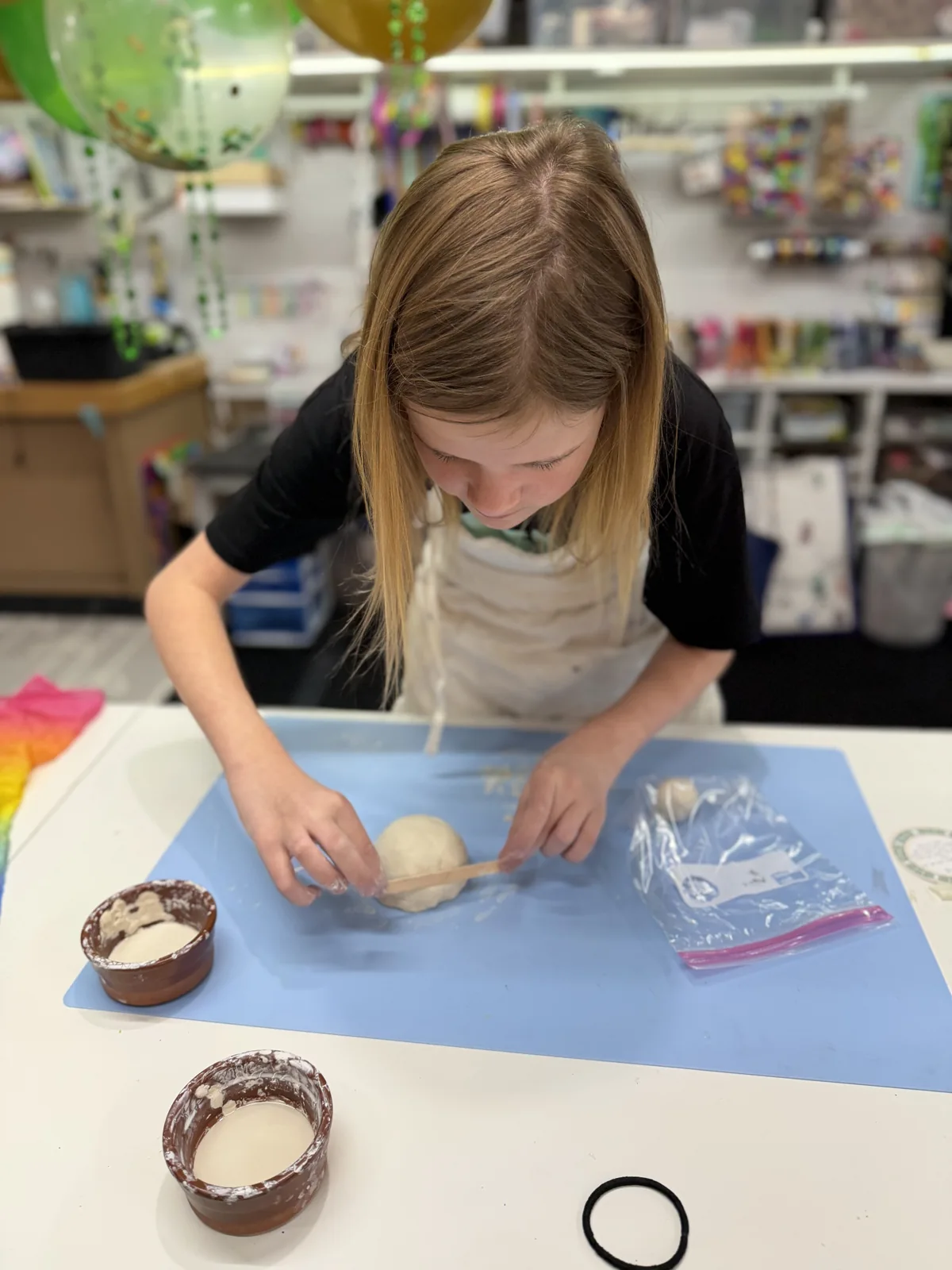
Throughout the year, we explore observation, proportion, light and shadow, form, space, texture, movement, and composition. We work across drawing, painting, sculpture, printmaking, and mixed media, learning how different tools and processes can support an idea.
You might practice a technique, test a few approaches, or look at how another artist solved a similar problem. Then you’ll use what you’ve learned to develop work of your own.
Projects build on each other, giving you opportunities to revisit skills and take them further.
A shared challenge. Your decisions.
We often begin with a question or an artistic problem to solve.
How can you make a flat drawing feel solid?
Where do you want someone’s eye to go?
How could you turn something familiar into something unexpected?
We explore the challenge together, then you make choices within it. Depending on the project, that might mean choosing your subject, planning a composition, testing materials, or deciding what you want the work to communicate.
I’ll help you consider your options and make a plan you can actually work with.
Test it out. See what happens.
A quick sketch can reveal a better arrangement. A material test can save you some guesswork. An unexpected result can give you a new direction.
Short technique labs and experiments give you space to investigate before committing to a bigger piece. Your Artist Training Journal holds studies, tests, ideas, and reflections you can return to.
There’s room to ask, “Could I try it this way?”—and figure out what happens next.


Choose a moment. Press play, or tap a photo to look closer.
What a class feels like
Two hours gives us time to settle in, learn something useful, and get into the work.
Start drawing.
A short arrival challenge gets you looking, thinking, and making marks.
Find the question.
We look at an artwork, object, or visual problem and talk about what we notice.
Build a skill.
I demonstrate a technique or process connected to the work ahead.
Get into your project.
You’ll have sustained studio time to develop ideas, test decisions, and ask for feedback. I check in along the way.
Reset the studio.
We store work, care for materials, and take responsibility for our shared space.
Look back—and ahead.
What’s working? What changed? What will you try next?
Feedback you can use.
Talking about art gets easier with practice.
We learn to describe what we notice, explain our choices, and ask questions that help someone move forward. You might hear, “My eye goes here first,” or ask, “How could I make this part stand out?”
You’ll practice considering feedback and deciding what to do with it. Sometimes a small adjustment makes a big difference. Sometimes an idea needs another round of exploring.
Revision becomes part of making the work.
“My eye goes here first.”
“How could I make this part stand out?”
Notice how far you’ve come.
A drawing you understand differently now. A tool you can use with more control. A problem you know how to approach.
We look for growth in your studies, experiments, decisions, and finished pieces. Through conversations, journal work, and portfolio reviews, you’ll practice recognizing what’s developing and choosing what to work on next.
Your work isn’t graded. We pay attention to effort, skill development, thoughtful choices, and what you’re learning through the process.
Make it. Choose it. Share it.
Our year-end art show is a chance to select work, refine it, and tell the story behind your choices. You’ll help prepare your pieces for display and put your ideas into words.
Explore Our Art ShowTricky is something we can work with.
Sometimes you can see what you want to make, but your hands haven’t caught up yet. Sometimes a material has other plans.
We slow down, identify the problem, and figure out a next step. I might demonstrate again, help you simplify a shape, or suggest a small test before you return to the piece.
You can ask for help, change direction, and keep learning.
A few things you might be wondering
Does my artist need previous experience?
Buds focuses on intentional skill building, with demonstrations and support along the way. If you’re unsure whether it’s the right starting point, tell me about your artist’s interests and experience so we can talk through the fit.
How much freedom will they have?
Projects have a shared learning focus, with meaningful choices built into the work. As artists develop skills and confidence using materials, they practice making more independent decisions.
Will they only be drawing?
Drawing and observation recur throughout the year, alongside painting, sculpture, printmaking, and mixed media. Materials are chosen to support the skill or artistic problem we’re exploring.
What if a project takes more than one class?
Many projects do. Sustained work gives artists time to develop an idea, solve problems, consider feedback, and make revisions. We store work between sessions and return to it.
Class details
Find a Buds Class
Ages 10–13 · Two-hour classes
Mondays · 12:30–2:30 p.m. or 4:30–6:30 p.m.
$110 per month · Materials included
Tooele, Utah. Ask Camila about current openings and registration.
Ask about a Buds openingWhat have you been wanting to make?
Bring your curiosity, your questions, and the ideas you’re still figuring out.
Let’s see where you can take them.